Conversion-focused web design: why most local business sites don't convert
A beautiful website that doesn't convert is an expensive brochure. For local service businesses, the only thing that matters is whether a qualified visitor takes action — calls, books, or fills out a form. Everything else is decoration.
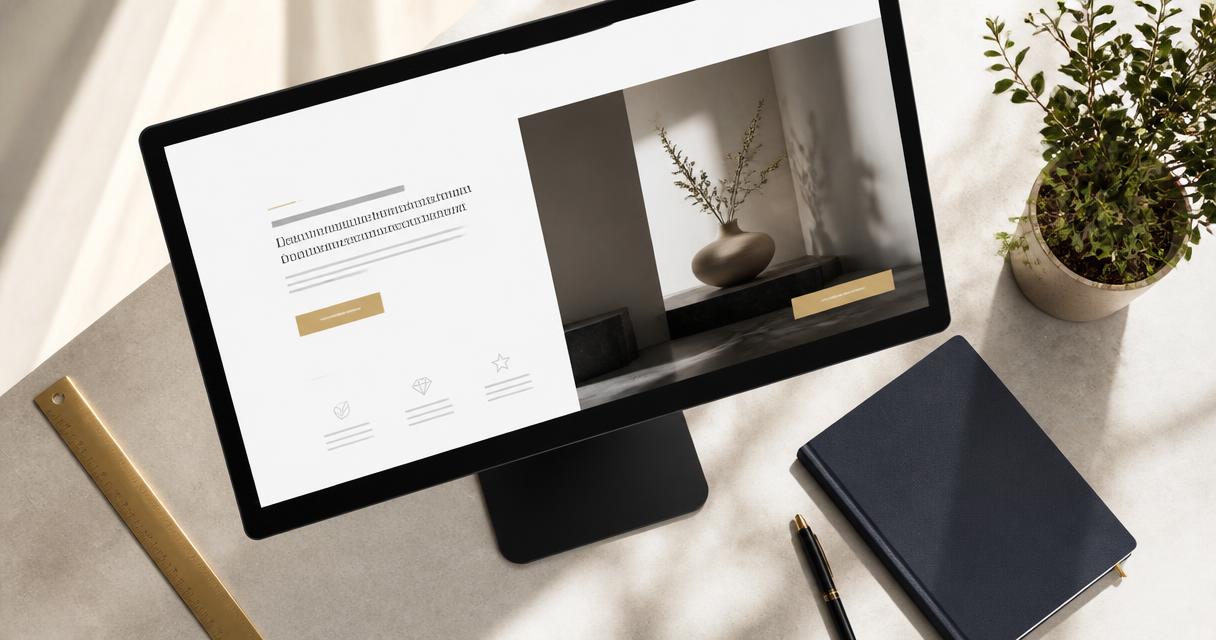
01 — Design is a business system, not an art project
The best local service websites don't win awards. They win leads. Every element exists to reduce friction and increase confidence: the headline, the images, the button color, the form length, the page speed, even the whitespace.
Conversion-focused design starts with the customer's decision process. What do they need to believe before they call? What objections do they have? What proof removes doubt? The site answers those questions in order, like a skilled salesperson would.
02 — The five leaks that kill local sites
Most underperforming sites make the same mistakes. They look professional but fail at the job of converting interest into revenue. Here are the leaks we fix most often:
No clear promise above the fold
State exactly who you serve, what you do, and the outcome in one headline.
Generic trust badges instead of proof
Use real reviews, before/after work, and specific results from real customers.
Buried or complicated contact forms
Keep forms short: name, phone, email, and what they need. One field more can cut conversions.
Slow load times on mobile
Optimize media, remove unused scripts, and keep the critical render path clean.
Too many choices, no next step
Every page should have one primary action. Secondary links should not compete.
03 — Speed is a conversion feature
Visitors decide whether to stay in milliseconds. If your site loads slowly, especially on mobile, a percentage of potential leads leave before they ever see your offer. Google research shows that as page load time increases from one second to three seconds, bounce probability rises by 32%.
A conversion-focused build treats performance as a feature from day one: optimized images, minimal JavaScript, clean typography, and hosting that responds instantly. The result feels premium and loads like it.
04 — Mobile is the main event
For local service businesses, the majority of traffic comes from phones. That means the mobile experience is not a secondary version of the desktop site — it is the primary experience. Buttons need to be thumb-friendly, forms need to be short, phone numbers need to tap-to-call, and the value proposition needs to be visible without scrolling.
If your site feels cramped, slow, or confusing on a phone, you are losing leads every day.
05 — Proof beats promises
Local customers are skeptical. They have been burned by contractors, HVAC companies, and service providers who overpromised and underdelivered. Your website's job is to remove that skepticism with proof.
Real reviews with names and photos. Before-and-after galleries. Specific service areas. Clear guarantees. License and insurance details. The more concrete the proof, the faster a visitor becomes a lead.
The conversion checklist
- One sentence above the fold that explains who you help and the result you deliver.
- A primary call-to-action visible without scrolling on desktop and mobile.
- Real proof: reviews, portfolio, case studies, or measurable outcomes.
- A contact form with four fields or fewer.
- Fast load times — under one second for the first meaningful paint.
- Mobile-first layout where thumbs can reach the main button naturally.
Before you redesign.
What local service owners ask before rebuilding their website for leads.
Conversion-focused web design is the practice of building every page around a single, measurable action — usually booking a call, submitting a form, or requesting a quote. Every headline, image, button, and section is judged by whether it moves a qualified visitor closer to that action.
They prioritize appearance over function. Big sliders, vague copy, buried contact forms, slow loading, and no clear next step leave visitors confused. When someone lands on your site, they should know exactly what you do, why they should trust you, and how to take the next step within the first few seconds.
Clarity beats cleverness. A strong converting site has a clear value proposition above the fold, proof points like reviews and finished work, a simple contact path, fast load times, mobile-first design, and no distractions from the main goal. The best sites feel inevitable — the visitor thinks, 'This is obviously the right choice.'
Critical. Studies show that every extra second of load time can drop conversion rates by 20% or more. On mobile, visitors are even less patient. A conversion-focused site is built lightweight from the start: optimized images, clean code, minimal third-party scripts, and fast hosting.
We start by studying the businesses already winning in your market. Then we build a site with clear positioning, premium visuals, fast performance, and a contact flow designed to remove friction. Every page is structured to earn trust and drive action — not just look good in a portfolio.
Most SVRN web design projects launch in 4–8 weeks. After launch, conversion improvements are often visible immediately because the site is built around how your customers actually make decisions. We also set up tracking so you can see exactly how many leads your site produces.